

Alignment concerns the wheel angles
An alignment checks and, where appropriate, adjusts wheel angles to the vehicle manufacturer's specifications. Balancing addresses how a wheel-and-tire assembly rotates. They are different services; neither is a diagnosis for every vibration or handling concern.
Pay attention to changes
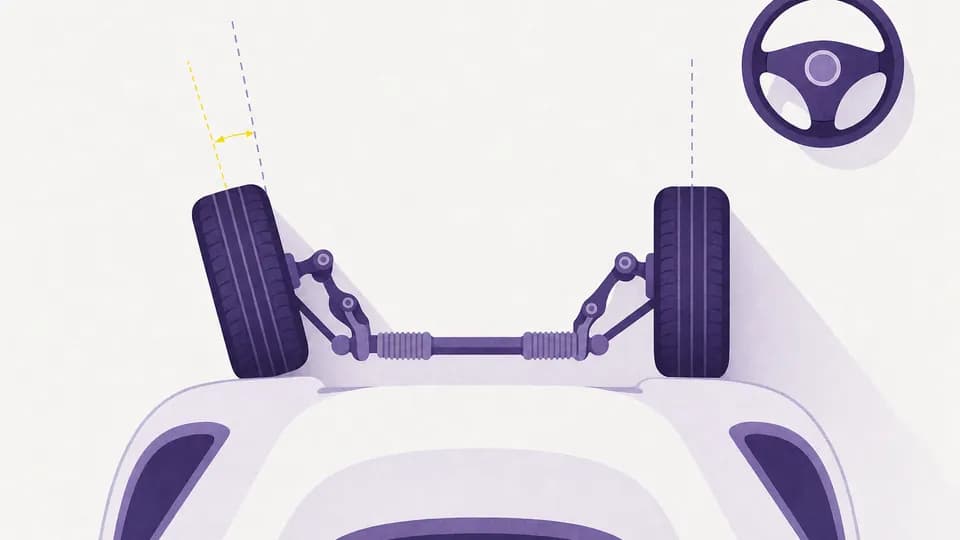
Pulling on a straight, level road, an off-center steering wheel or uneven/rapid tread wear are reasons to book an inspection. A pothole or curb impact can also warrant a check. Describe when the symptom started and at what speeds or road conditions it occurs. Tire pressure, tire damage and steering or suspension faults can also contribute, so don't assume the cause from one symptom.

Use the manufacturer's schedule
USTMA recommends checking alignment when there are signs of trouble and periodically as the vehicle manual specifies. There is no universal alignment interval that suits every vehicle and road condition. A tire change is a useful time to discuss wear patterns, but this guide does not say every new tire purchase automatically requires a paid alignment.
Ask what was measured
Ask the technician to explain the measured angles, the vehicle specifications and any worn components that affect adjustment. Alignment does not restore tread that is already worn away. Confirm the recommended work and its price before authorizing it.

Do not drive through a serious handling change
If the vehicle becomes difficult to control, stop in a safe place and arrange assistance. An online guide cannot tell whether it is safe to continue driving.

