

A nail is a reason to inspect, not a repair verdict
USTMA recommends considering puncture repair only when the injury is in the repairable tread area and no larger than 1/4 inch (6 mm). A technician must remove the tire from the wheel and inspect the inside as well as the outside. A small hole can hide damage, especially after driving with very low pressure.
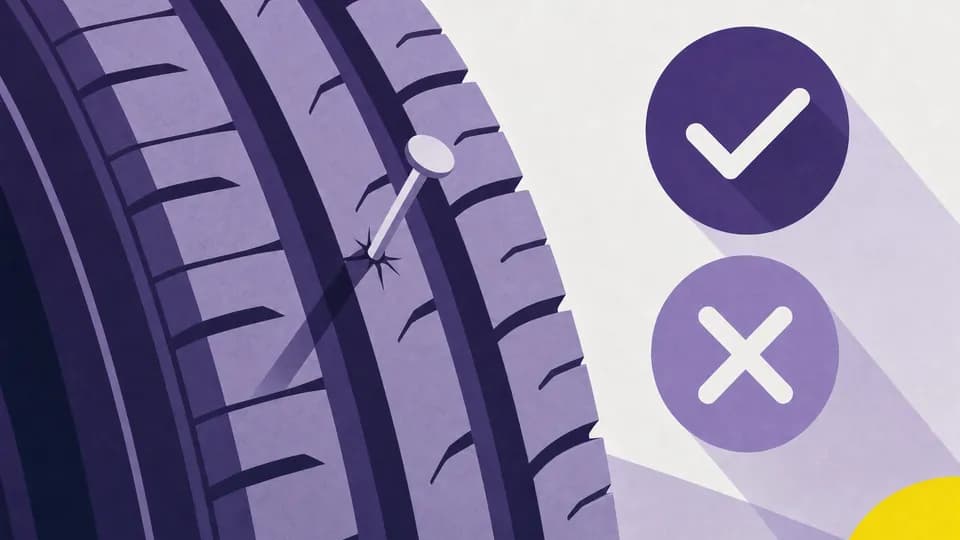
Location matters
Sidewall damage and injuries extending into the shoulder/belt-edge area are not repairable under these procedures. Repairs must not overlap, and USTMA says a tire with an existing improper repair must be scrapped. Tire manufacturers can impose additional limits, including for run-flat tires. Meeting the size limit alone does not guarantee repairability.

A proper repair works from the inside
USTMA calls for filling the puncture path with a rubber stem and sealing the inner liner with a patch, often as a combination repair unit. An outside plug alone is not an acceptable permanent repair. This guide does not teach a do-it-yourself puncture repair or promise that a temporary sealant makes a tire safe for continued use.
Do not keep driving on a flat
If pressure is dropping or handling changes, pull over safely and follow the vehicle manufacturer's instructions for roadside assistance, a spare or its mobility system. Tell the technician if sealant was used or the tire was driven while flat. Follow any spare/run-flat limits in the manual rather than assuming a universal distance or speed.

Replacement is sometimes the safe outcome
Worn tread, structural damage or manufacturer restrictions may rule out repair. Ask for the inspection findings and replacement options, including how a replacement should match the other tires and the vehicle manufacturer's requirements. No repair eligibility, repair price or free-repair policy is promised here.

