

Check pressure monthly, and before a longer trip
Use a gauge when tires are cold—USTMA defines that as parked for at least three hours. Follow the driver's door label or owner's manual, including different front/rear pressures if specified. Check the spare as directed by the vehicle manual. A TPMS warning is not a replacement for a regular gauge check.
Look at the whole tread and sidewall
Inspect for uneven wear, cuts, cracks, bulges and repeated air loss. Wear bars that are flush with the surrounding tread indicate replacement is needed; USTMA identifies 2/32 inch as the replacement point. Tread depth alone is not a promise of safe traction in every condition, and visible damage can require attention sooner. Have unusual wear or damage evaluated rather than waiting for a mileage milestone.

Use the right rotation schedule and pattern
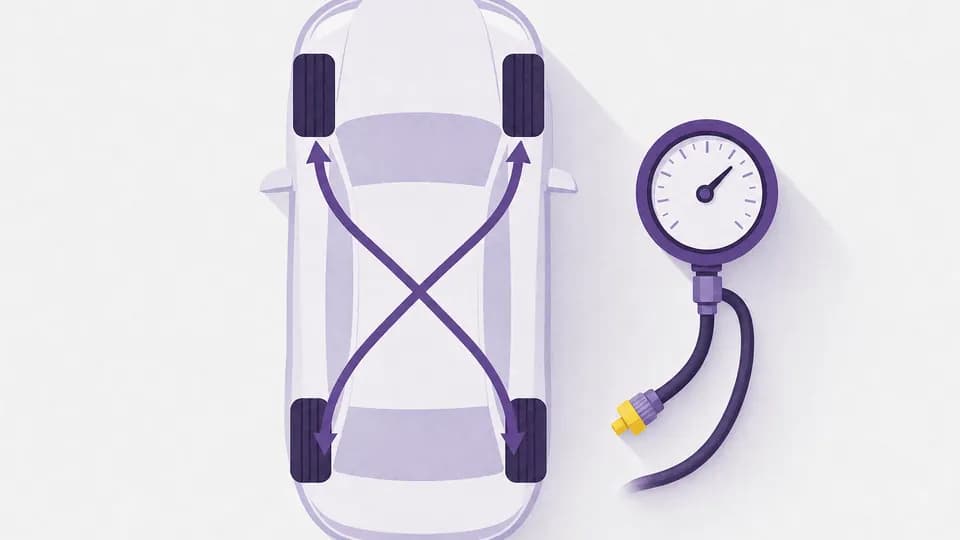
Start with the vehicle manufacturer's instructions. Where no interval is specified, USTMA recommends rotation every 5,000–8,000 miles. That is general guidance, not a warranty promise or a schedule for every vehicle. Directional tires and different front/rear sizes can limit possible patterns; some vehicles should not be rotated. Do not simply swap axles on a staggered setup.
Rotation cannot fix a mechanical problem
Pulling, vibration or rapid uneven wear may need alignment, balancing or another inspection. Moving the tires does not repair the cause. After an appropriate rotation, pressures must match the manufacturer's specification for each new position, and TPMS may need the vehicle-specific relearn procedure.

Keep a short record
Note the date, odometer reading, pressure checks and completed services. Follow the tire manufacturer's age/inspection guidance and any actual warranty terms supplied with your tires; do not assume a mileage warranty predicts usable life.

