

Treat a steady warning as a reason to check
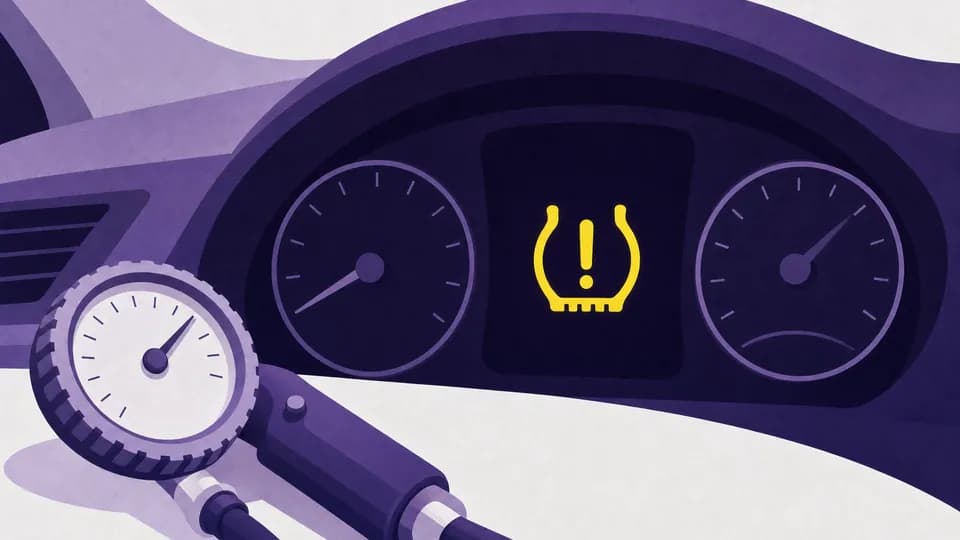
TPMS means tire pressure monitoring system. A low-pressure warning usually means at least one tire is significantly underinflated. Inspect the tires and check pressure as soon as it is safe to do so. If a tire is flat, damaged or the vehicle handles abnormally, stop safely rather than driving to warm the tires or waiting for the lamp to clear.
Use the vehicle's pressure, not the sidewall maximum
Check cold pressure with a gauge against the driver's door label or owner's manual. Different axles may specify different pressures. Restore pressure as the manufacturer directs and investigate repeated losses; adding air does not repair a leak.

A flashing warning can mean a system fault
NHTSA explains that a warning that flashes for about 60–90 seconds and then remains lit can indicate a TPMS malfunction. Consult the manual and arrange a system inspection. Do not assume pressure is correct when the system itself may not be working.
A cold morning can reveal low pressure
A warning that goes away as the day or tires warm up still calls for a pressure check. Temperature changes affect pressure; they do not prove there is no leak. Never rely on the tire's appearance alone.

Resetting is not a repair
Relearn/reset procedures differ by vehicle and can be needed after service. Use the owner's manual or a technician rather than a universal button sequence. Replacing a sensor is not automatically necessary when the lamp appears, and a routine installation/TPMS service kit is not a promise of a new sensor. Ask what is included in the estimate.
Keep checking monthly
TPMS is a warning system, not routine maintenance. U.S. model-year 2008 and newer passenger cars, light trucks and vans are generally equipped as NHTSA describes; older vehicles may have it too. Confirm your vehicle's equipment and instructions rather than choosing service solely from its model year.

