

Start with the vehicle, then the sidewall
The driver's door label and owner's manual identify the size recommended for your vehicle. The tires fitted today may not be the original size, especially if the wheels have been changed. Compare the sidewall with that information before searching. If they disagree, ask a tire professional to check the fit rather than treating a search result as confirmation.
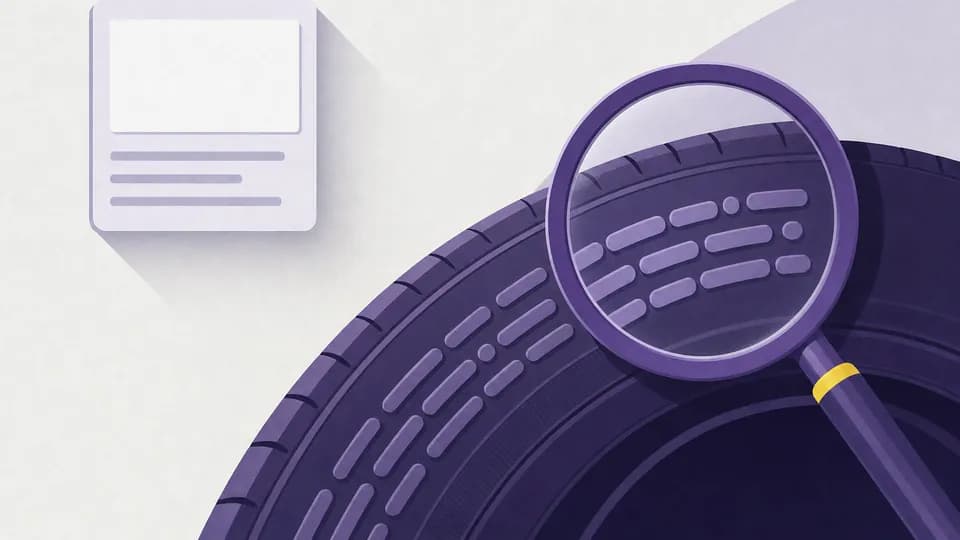
Read 225/60R17 one part at a time
225 is the nominal section width in millimeters. 60 means the sidewall height is 60 percent of that width; it is not 60 millimeters. R means radial construction. 17 is the wheel diameter in inches, not the outside diameter of the tire. The tire's wheel diameter must match the wheel. This example explains the notation; it is not a size recommendation for your vehicle.

Keep the letters and ratings
A P or LT marking identifies a tire application; don't substitute one just because the size numbers look similar. The load index and speed rating following the size are also part of selecting an appropriate replacement. Confirm the vehicle manufacturer's requirements, including load range or reinforced specifications where applicable. A speed rating is not permission to exceed speed limits or drive faster than conditions allow.
Check front and rear separately
Some vehicles use different sizes on the two axles. Record both sizes and use the staggered-size search when they differ. Size alone cannot confirm wheel clearance, load capacity or suitability for a modified vehicle.

Pressure is a different number
Use the vehicle's recommended cold inflation pressure from its label/manual, not the maximum pressure molded on the tire. Our tire-care guide explains when to check it.

